Timeline
January 2026
Discipline
Team
Manvi Lakhotia
LOWKEY
Designing shared expenses around social comfort, not just calculations
Shared expense apps calculate money correctly, but they fail to support how people actually behave around money.
Users delay logging, avoid reminders, and ignore small amounts—not because they don’t care, but because money conversations feel uncomfortable.
LOWKEY explores how expense tracking can be designed around social comfort, timing, and intent, making shared finances feel less awkward and more natural.
Hightlights
Insights from Articles and Papers
Users do not struggle to split expenses correctly, they hesitate because logging money feels socially risky. The fear of seeming petty or transactional causes delays, avoidance, or incomplete tracking.
Minor amounts are frequently ignored because they feel “not worth the awkwardness,” even though they add up over time.
Cold, financial terminology (“owe,” “due,” “request”) reinforces transactional behavior. Users respond better to neutral, reassuring language that acknowledges social context.
Existing apps show what is owed but not why it was logged or how urgently it matters. This absence of intent leads to misinterpretation and unnecessary tension.
While transparency is meant to help, constant visibility of balances often triggers guilt, embarrassment, or silent pressure. Users open apps less frequently to avoid uncomfortable emotions.
Overview Screen
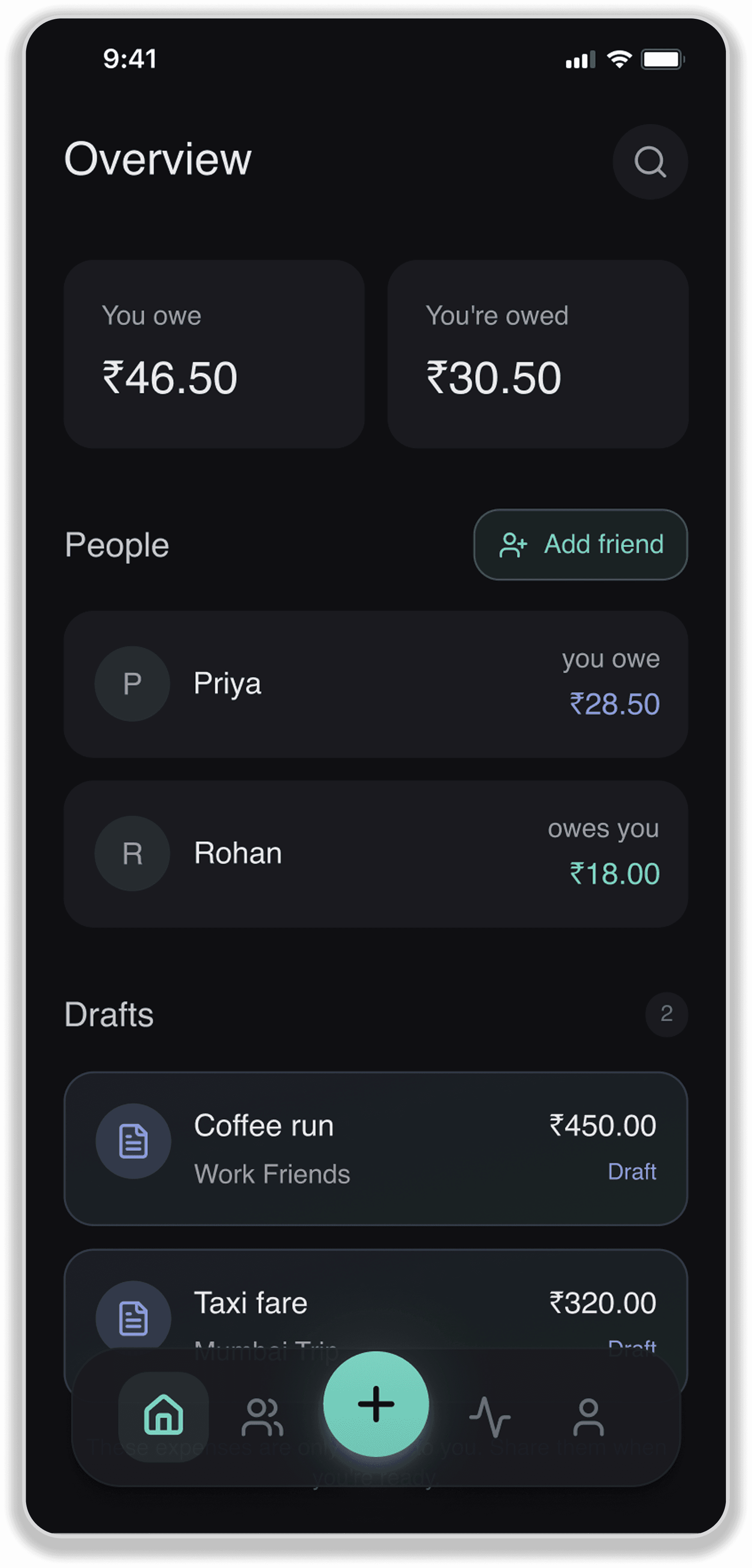
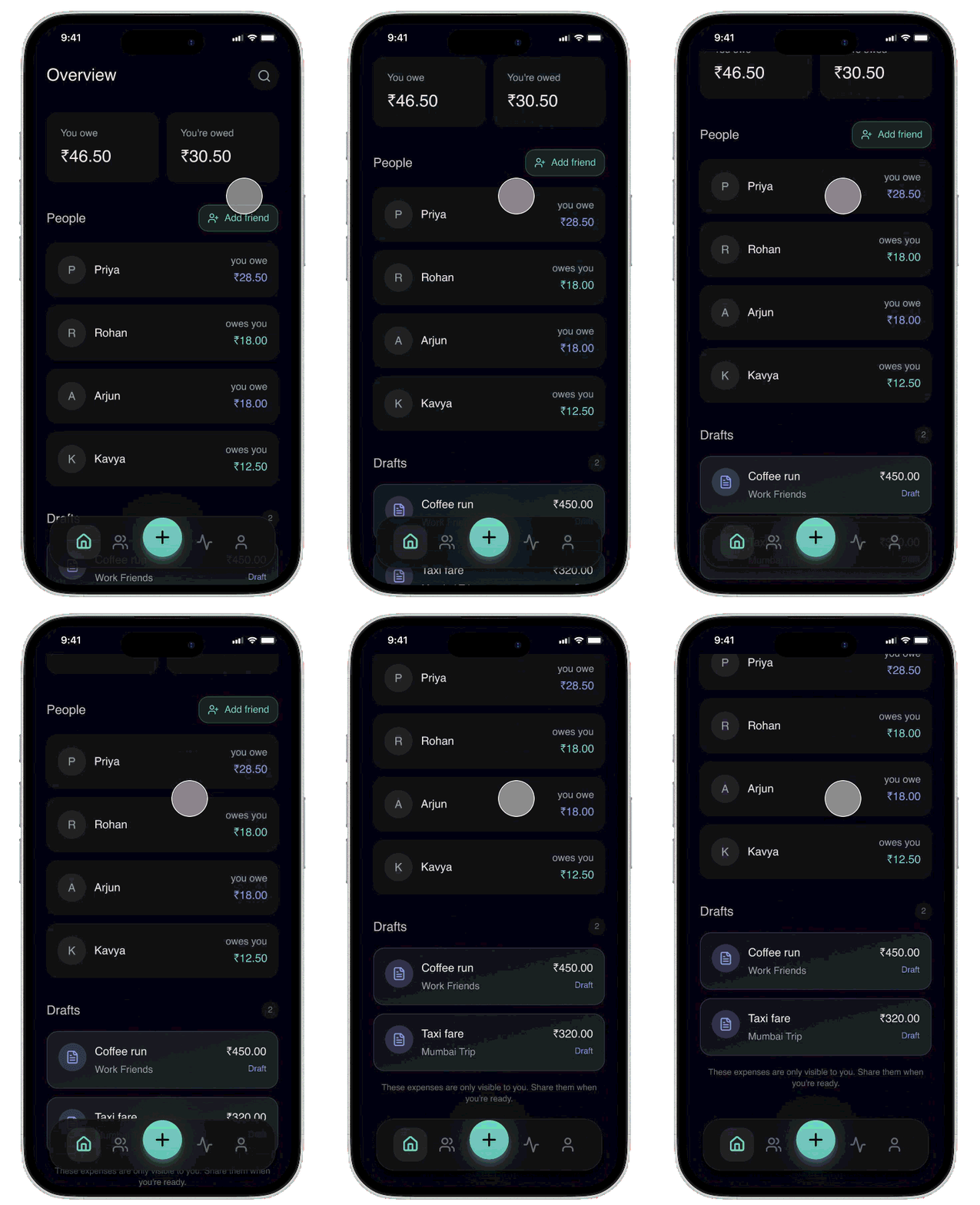
The Overview Page gives a snapshot of all your personal balances. Users can quickly see how much they owe and how much they are owed. It also shows individual balances with friends, so you know who you need to pay or collect from.
Draft expenses are visible only to the user, allowing them to add expenses privately before sharing with the group.
Groups
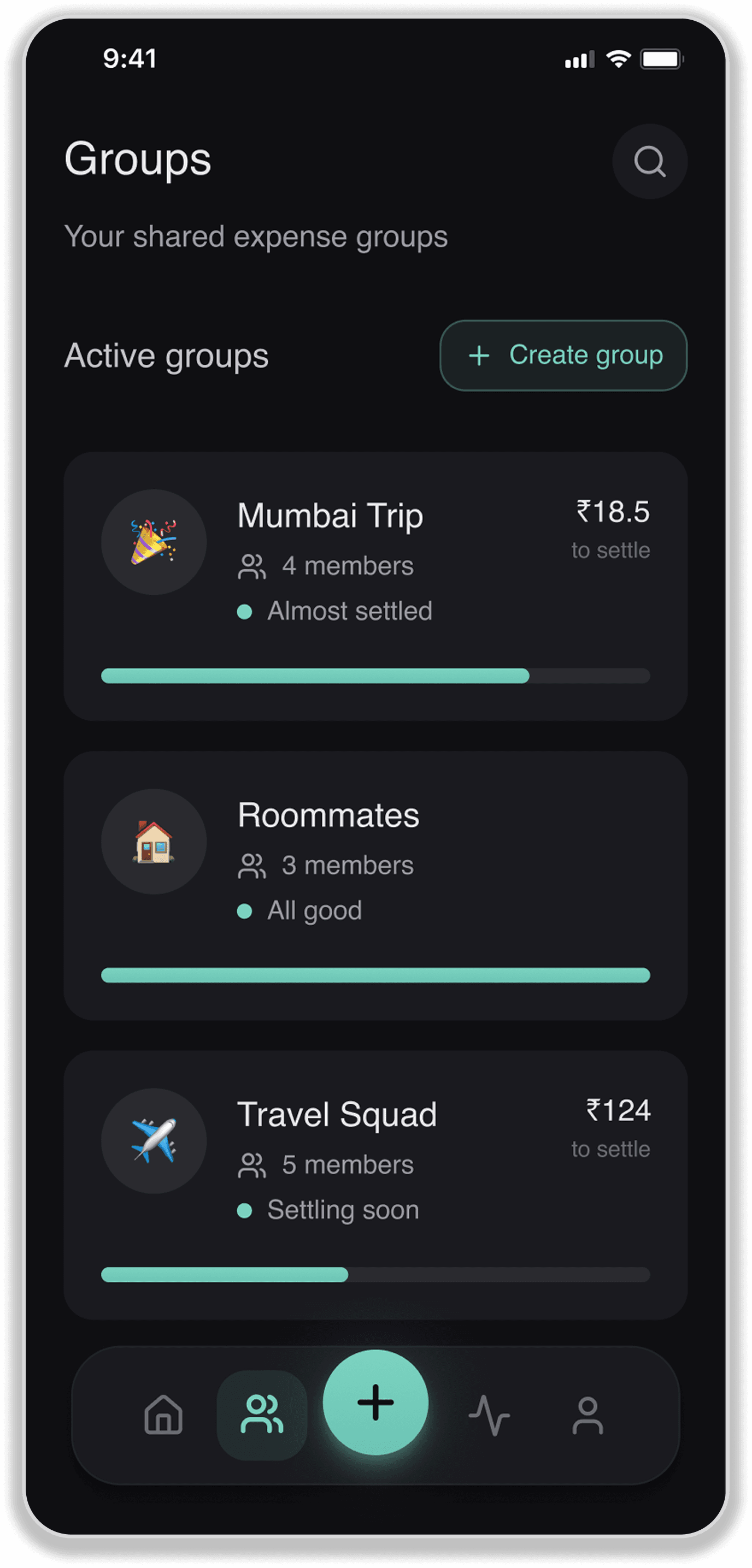
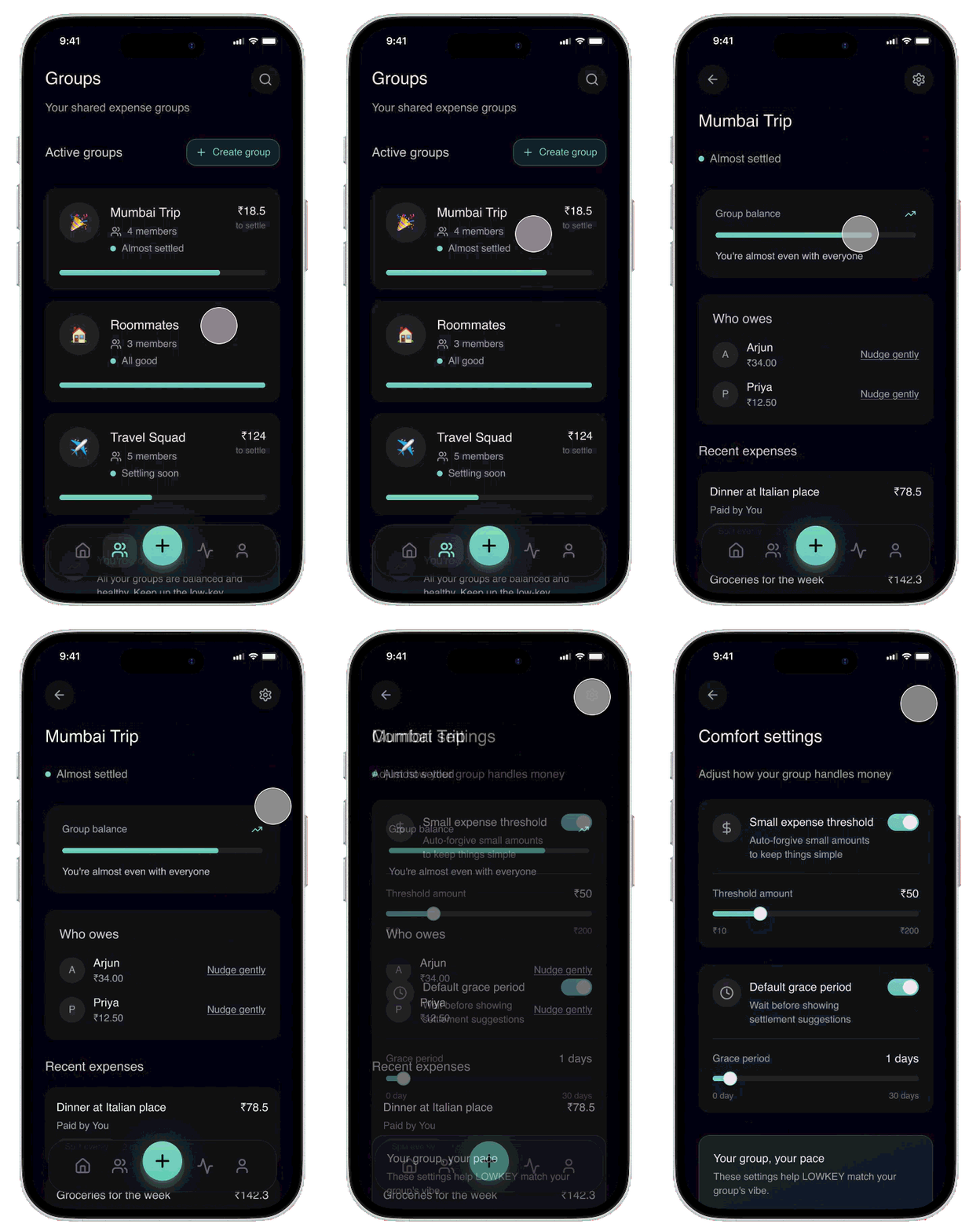
The Group Page shows all shared expense groups, their status, and recent activity. Users can see active groups, how much is owed or to settle, and a quick view of group balances. Each group displays members, recent expenses, and gentle nudge options for reminders.
Comfort settings let the user customize how the group handles money for themselves. They can set a personal grace period before an expense appears in the group and choose to auto-forgive small amounts. These settings are only visible to the user, not to other group members.

Add an Expense
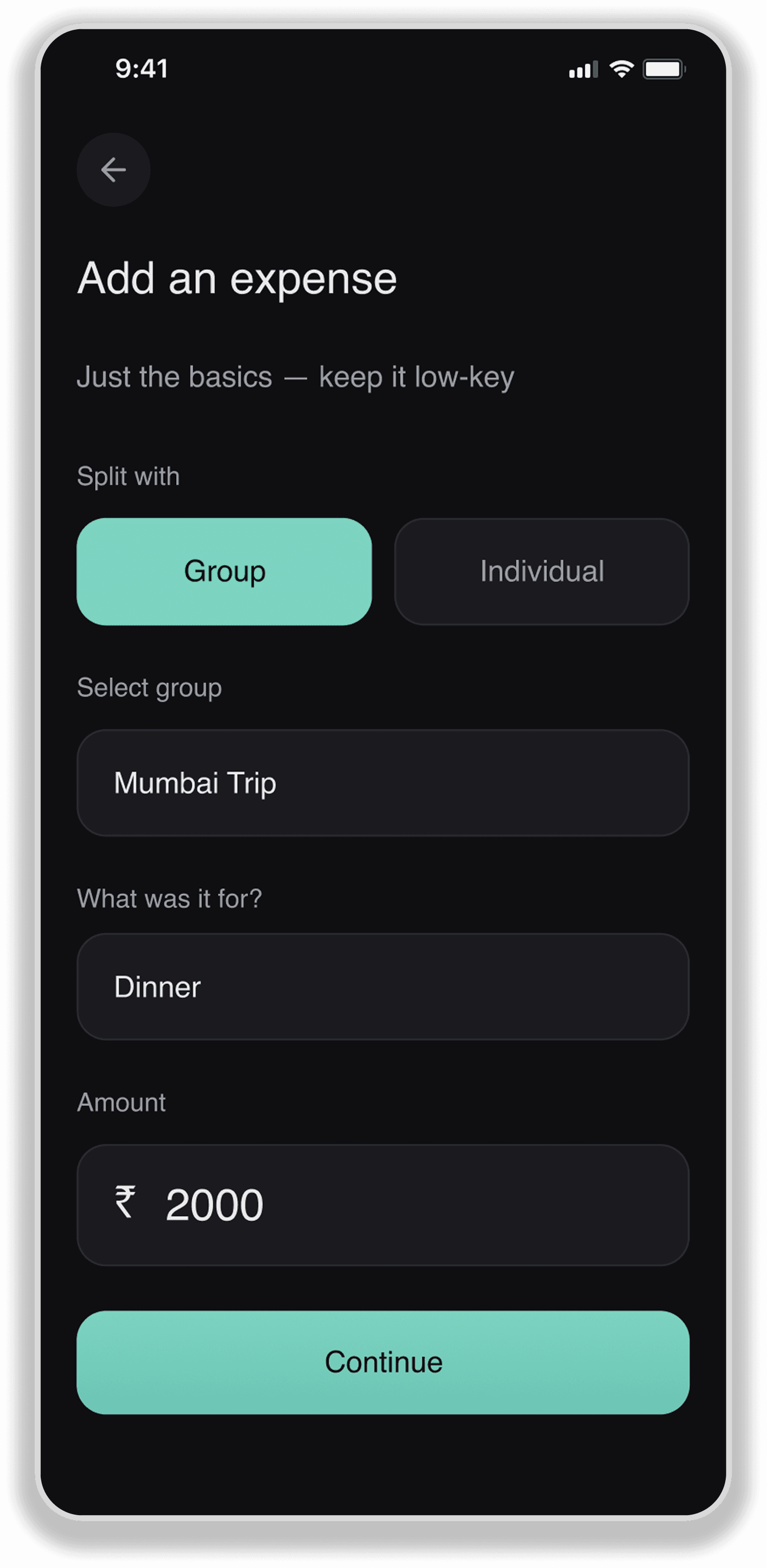
The Add Expense flow starts by letting users choose whether the expense is shared with a group or with an individual.
Users then enter simple details like what the expense was for and the amount, without being overwhelmed by extra steps.
Next, users choose how the expense should work. Options like Split evenly, I got this, Keep it casual, and Custom split replace rigid financial language with more natural choices.
The flow stays short, calm, and non judgmental from start to finish.
Gentle Nudge Feature
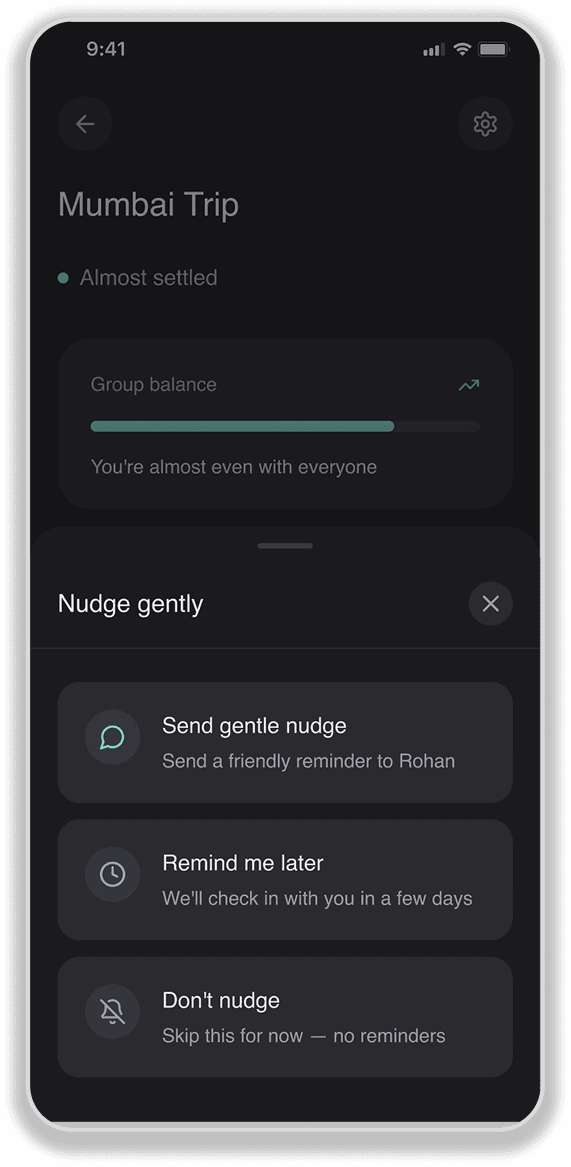
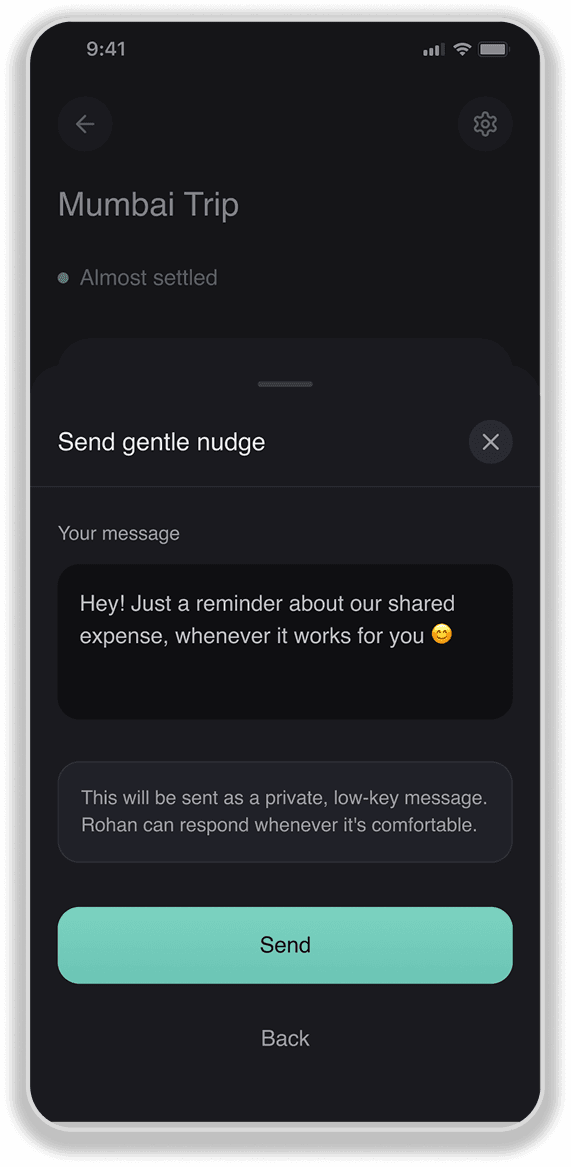
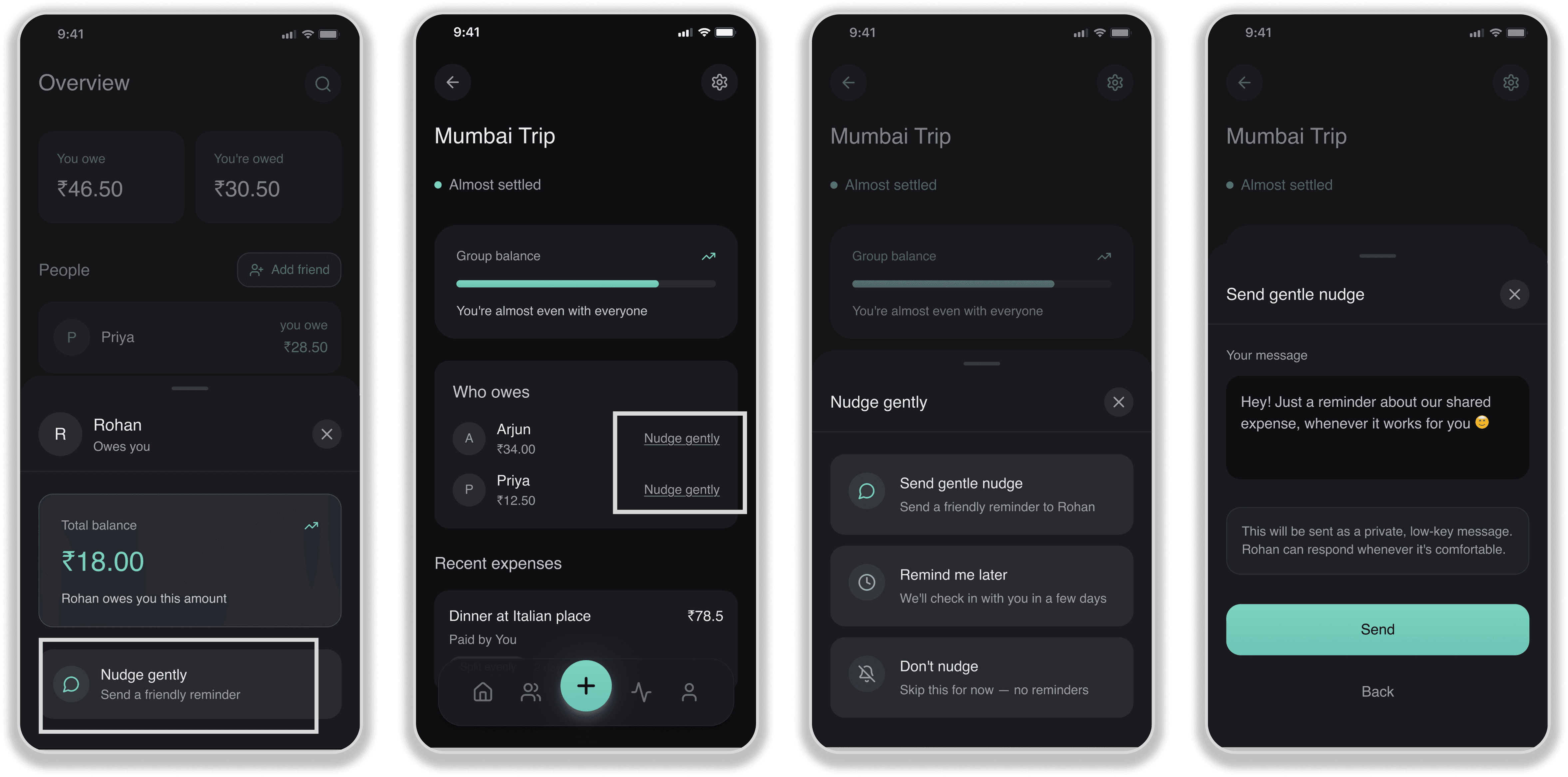
• Gentle Nudge allows users to send soft, friendly reminders for pending expenses
• Messages are private and low key, avoiding public or awkward group pressure
• Users can personalize the message or use a default kind prompt
• Options like remind me later or skip for now give full control over timing
• The feature clearly communicates that responses can happen at the other person’s pace
Activity & Profile
Activity Page
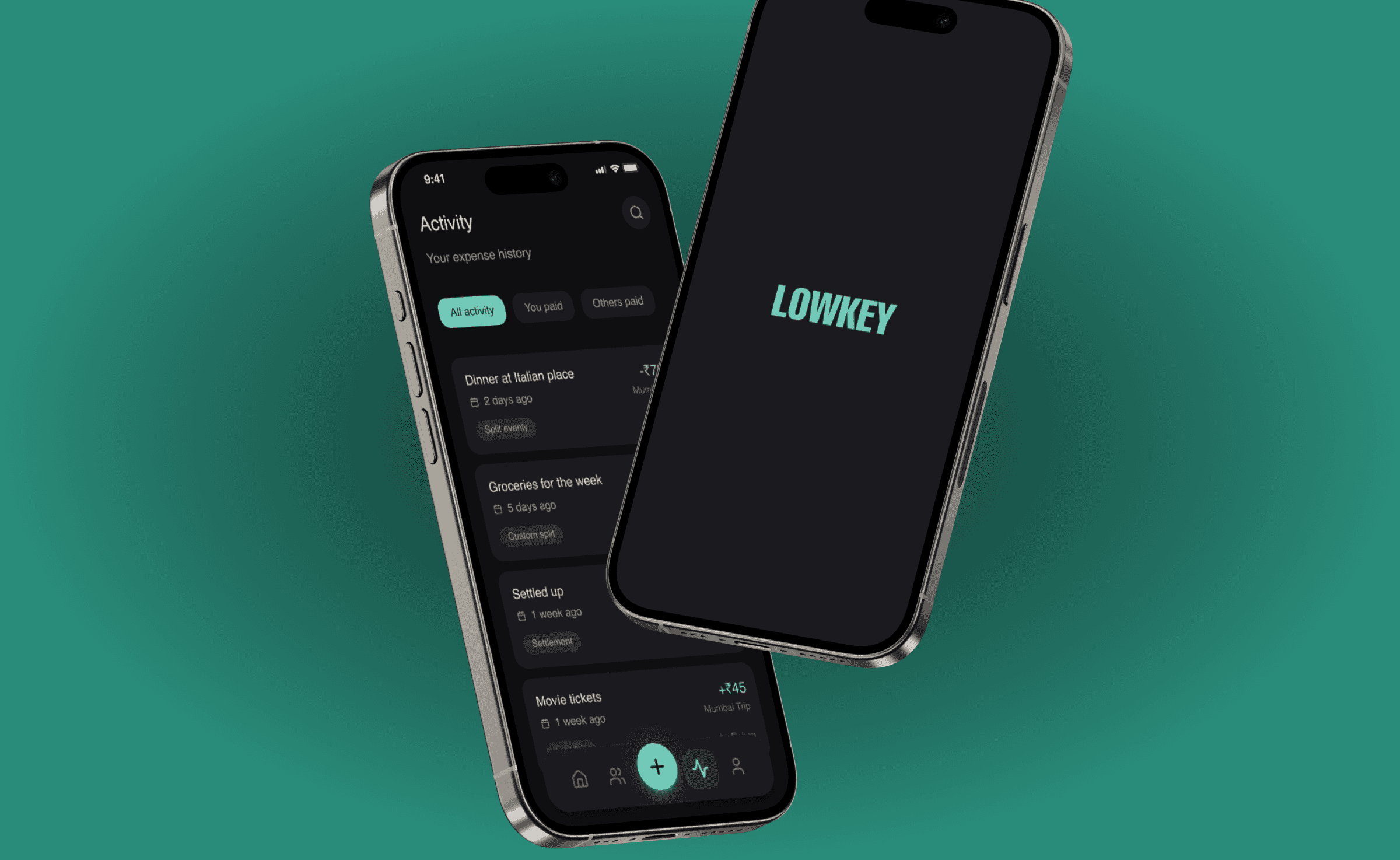
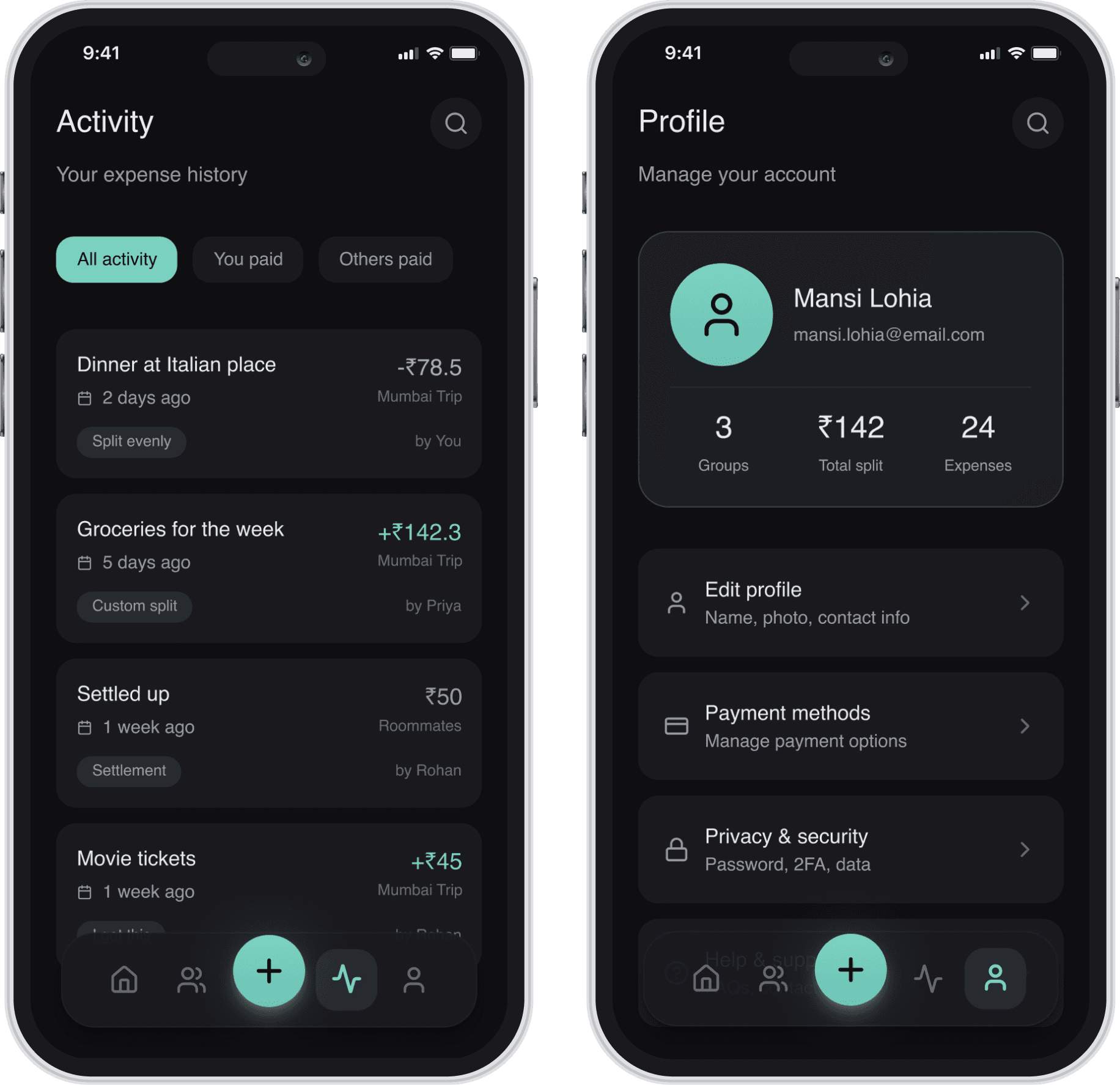
Displays all expense history with details like who paid, group, amount, and split type. Users can filter between “You paid” and “Others paid.”
Profile Page
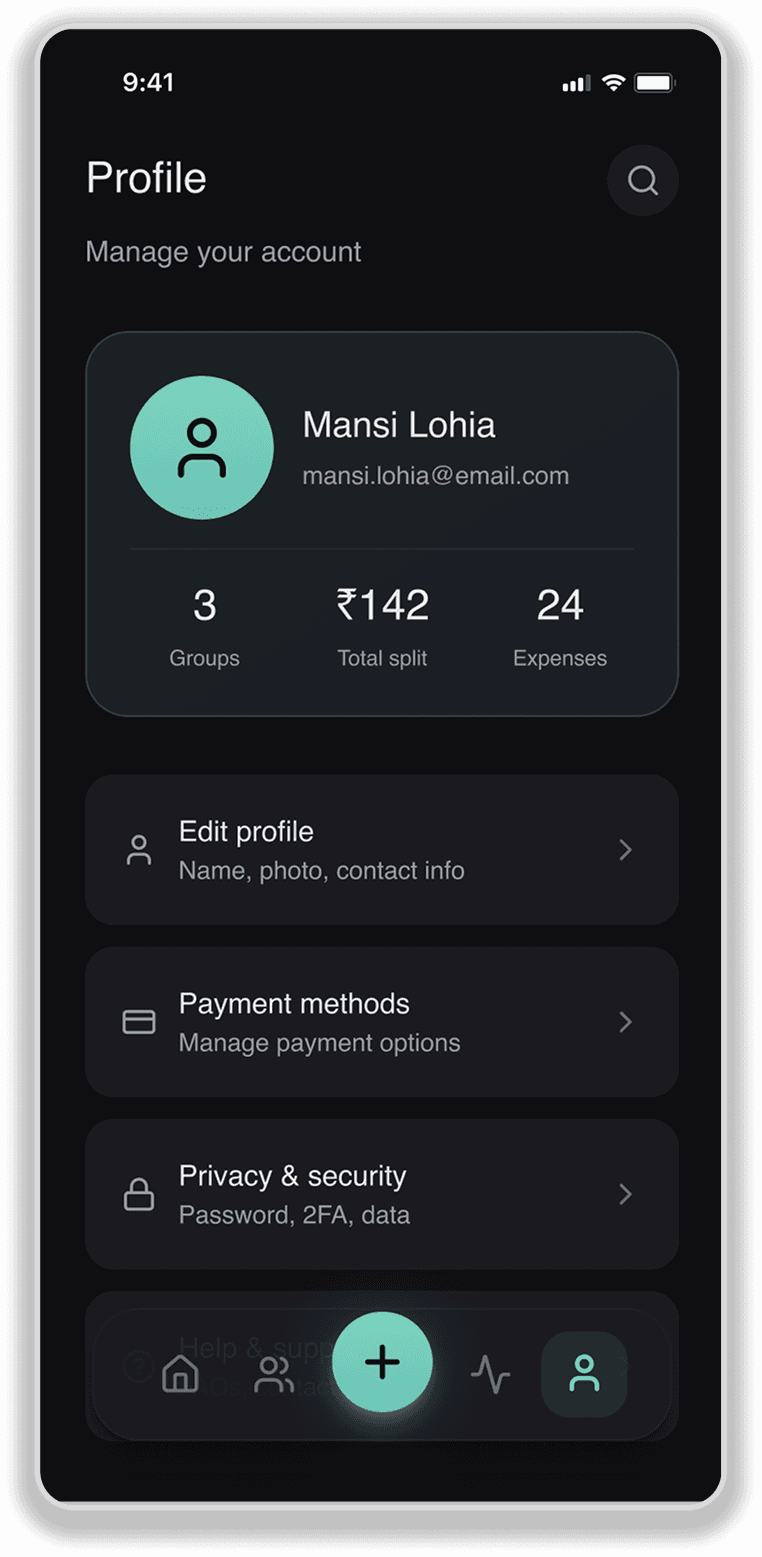
Shows user information, payment methods, privacy, and account settings. Users can edit their profile and manage preferences.
Reflection
Key Takeaways
Shared expense issues are often driven more by social discomfort than financial complexity
Emotional factors like awkwardness, guilt, and timing strongly influence user behavior
Flexibility, intent, and low pressure interactions can make expense sharing feel more natural
Designing for social comfort can improve both usability and long term engagement
What would I do differently?
Test the product with more diverse group dynamics
Explore comfort settings and nudges in real world scenarios
Refine tone and language through deeper user testing
Validate long term behavioral impact of delayed sharing and reminders