Timeline
January 2026
Discipline
Team
Manvi Lakhotia
Recognition
2nd Runner up
organized by IIT Guwahati
First 30
Guiding emergency response during a possible heart attack
This project focuses on helping caregivers take the right actions during the first critical 30 minutes of a suspected heart attack.
In high-stress situations, people often panic, delay decisions, or struggle to understand symptoms. The app provides a clear, step-by-step guide that helps users recognise risk, call emergency services quickly, and follow simple first-aid instructions while waiting for help.
The experience is designed to reduce confusion, support decision-making, and keep users calm during emergencies.
Hightlights

Why this project?
Heart attack symptoms are often misunderstood or ignored in the early stages. During the first 30 minutes, caregivers panic, delay decisions, or search online instead of acting. A clear, calm digital guide can reduce confusion and help them take the right steps while waiting for medical help.
Target Audience - Adult Caregiver at Home and Elderly person
Insights from Articles and Papers
Early heart attack symptoms are often mild, unclear, and easily mistaken for acidity, stress, or fatigue, especially in women and older adults.
Caregivers commonly delay calling emergency services because they are unsure if the situation is serious enough and fear overreacting.
Family caregivers play a critical role in decision-making and often notice symptom patterns before the patient acknowledges danger.
Clear, directive guidance with a single strong action (“call emergency services now”) helps people act faster than open-ended or informational content.
Reassurance that uncertainty is normal, combined with time-critical cues, increases confidence to take immediate action.


Onboarding screens
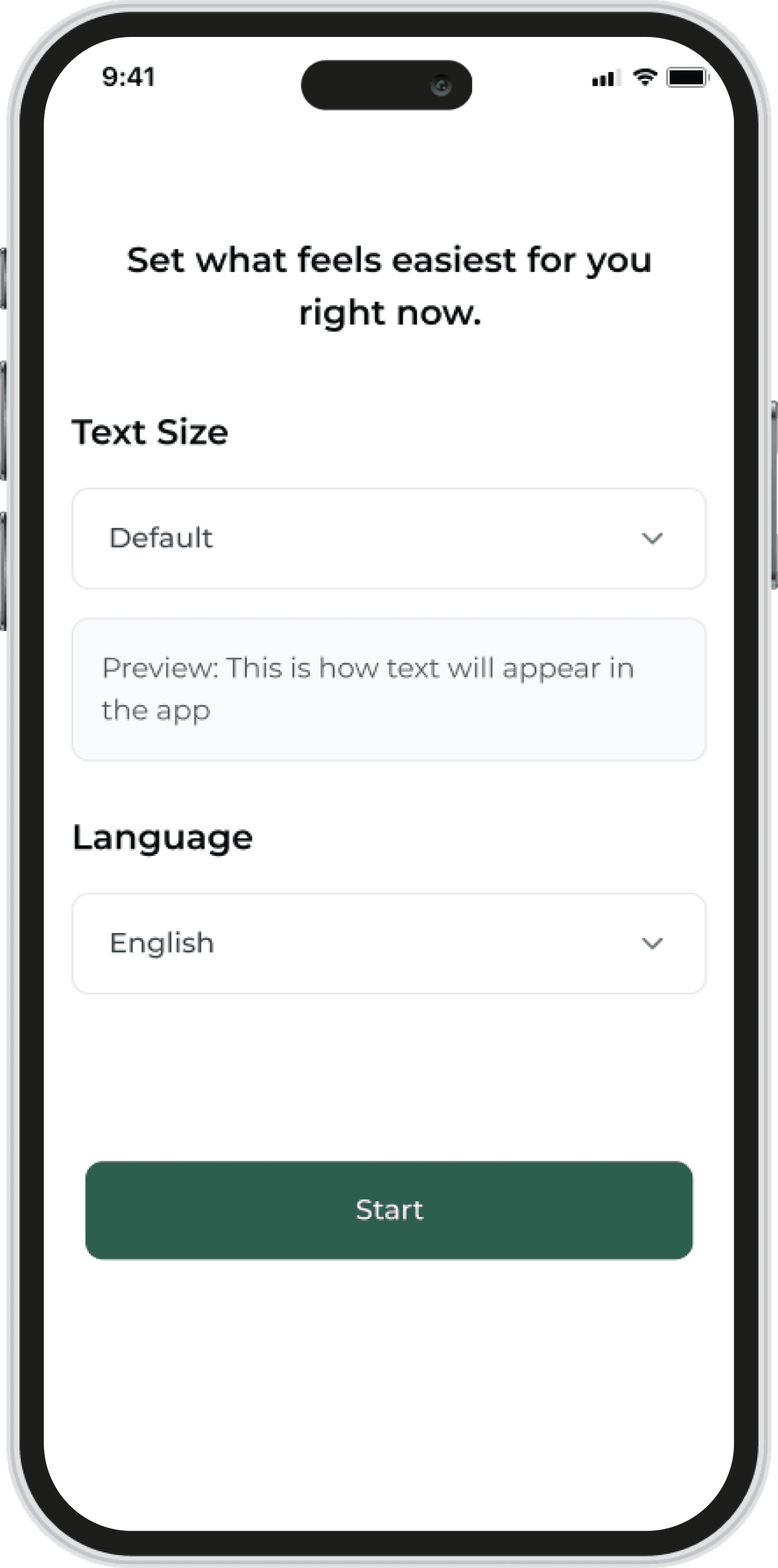
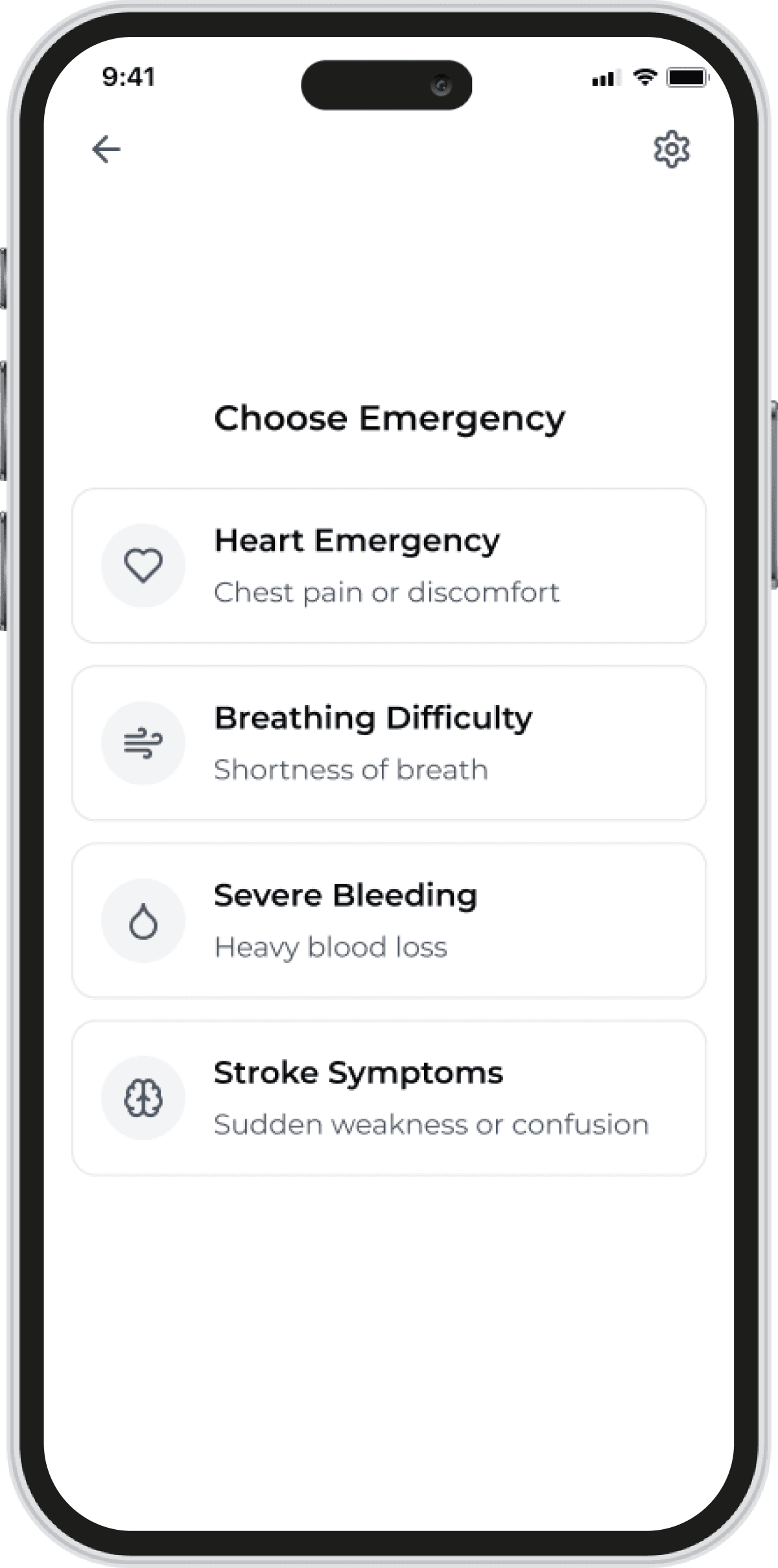
The onboarding flow is designed to reduce panic before action by helping users quickly set up what feels easiest in a stressful moment. Users first adjust text size and language preferences for accessibility, then learn how the app can help by recognising warning signs, guiding first aid, and supporting emergency action before selecting the relevant emergency type. This creates clarity, confidence, and ease of use before entering the critical flow.
Symptom Recognition & Emergency Action
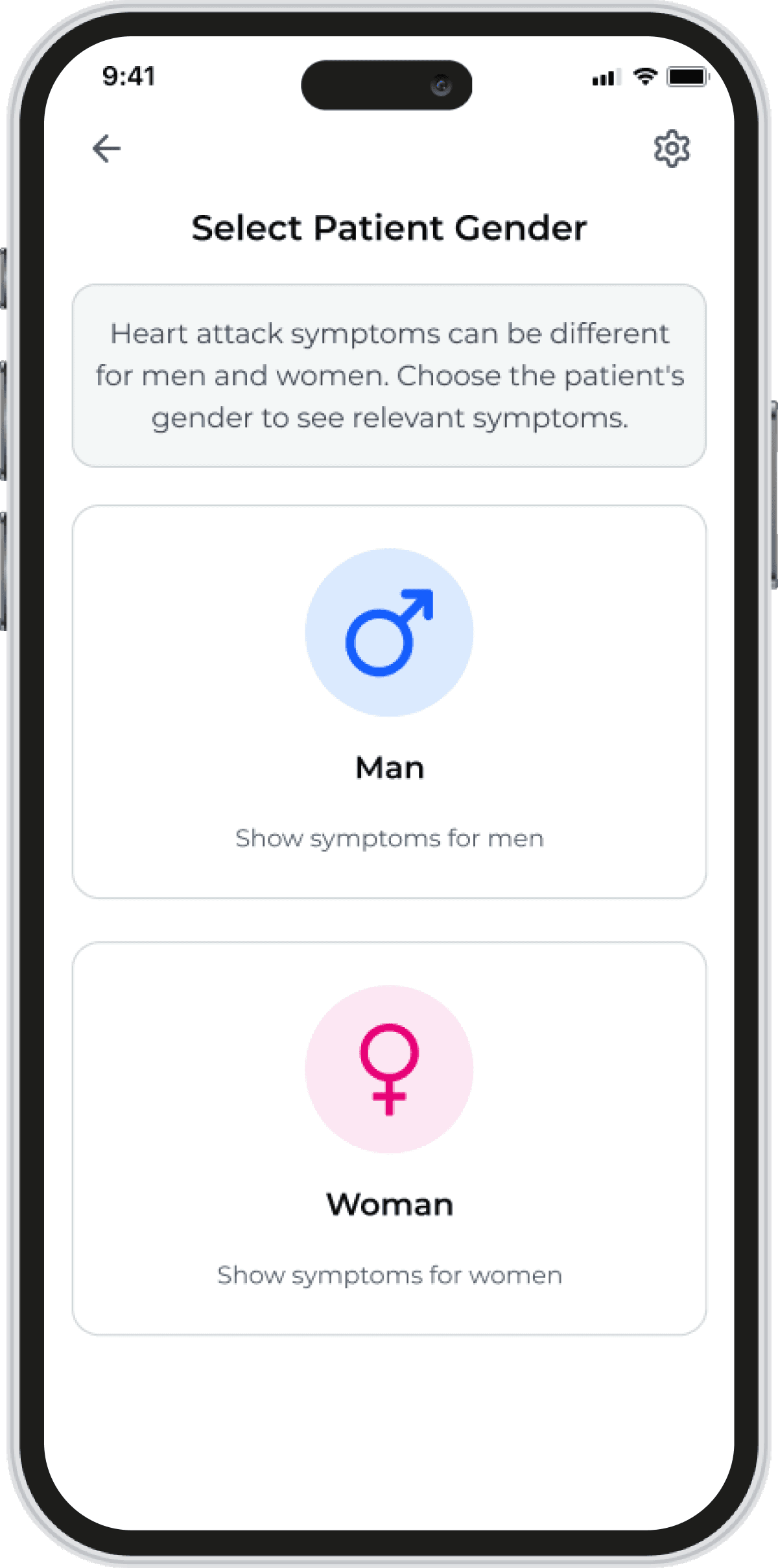
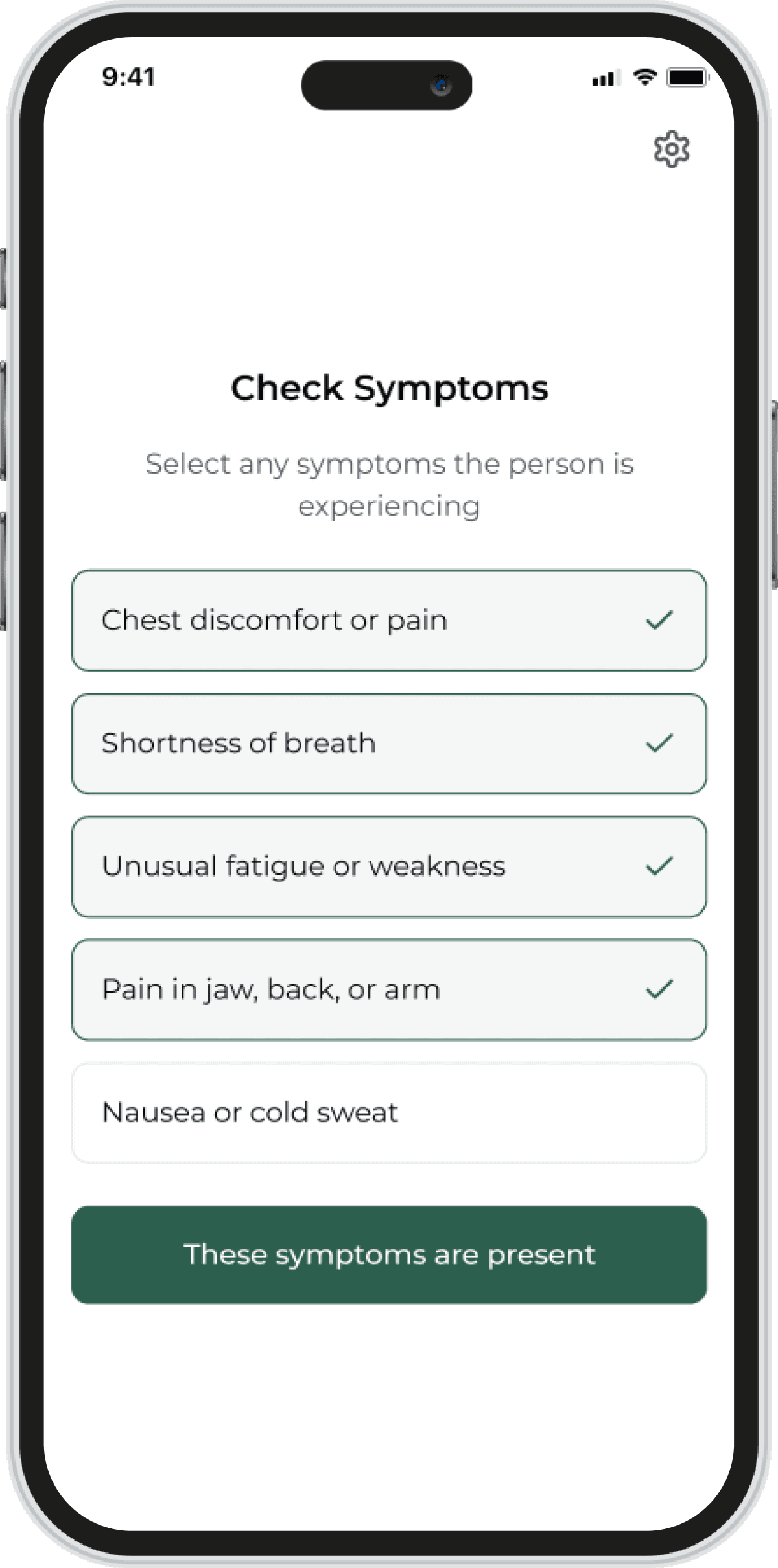
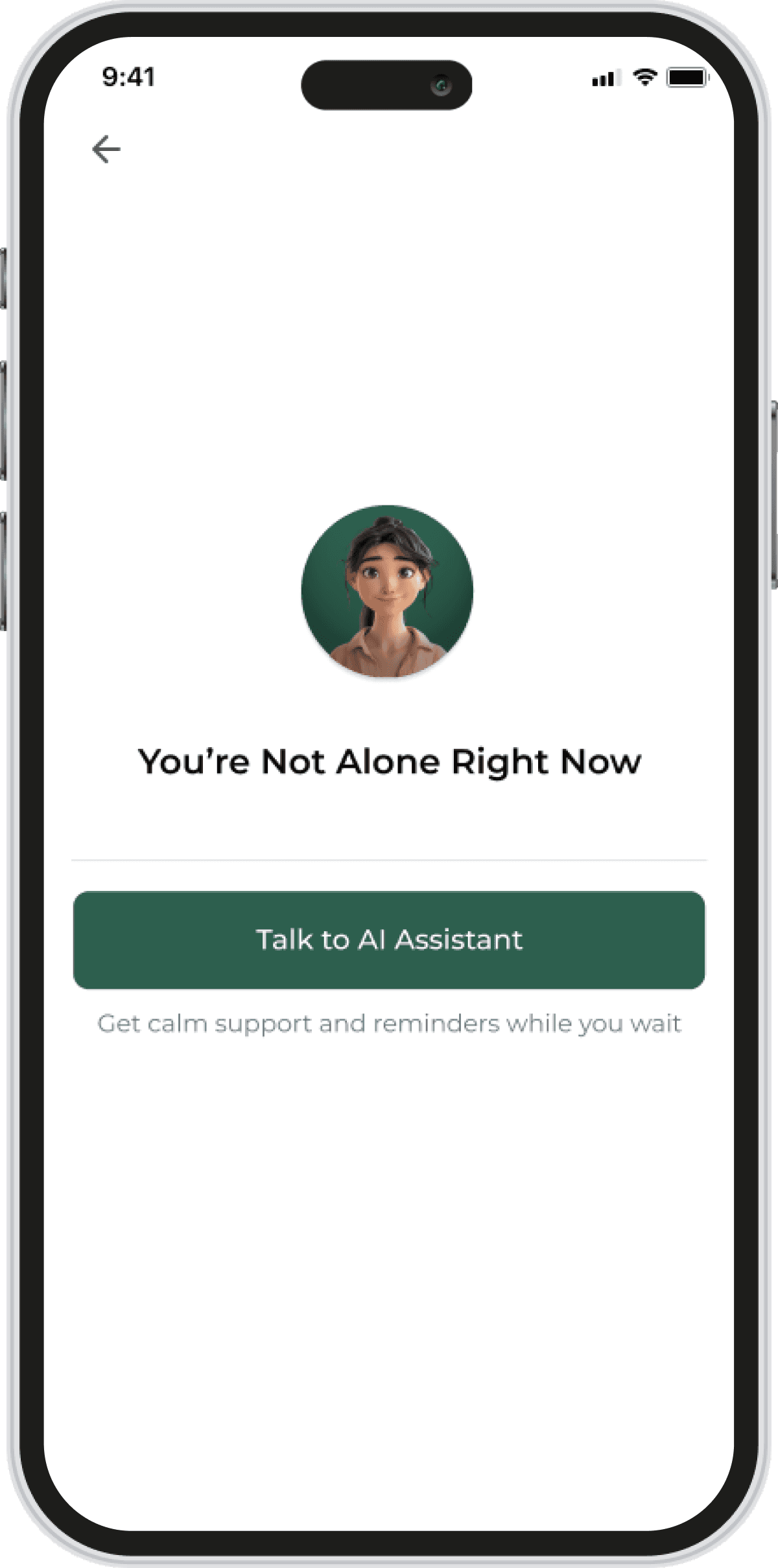
This stage helps users quickly assess possible heart attack symptoms through gender specific symptom guidance, ensuring more relevant and inclusive recognition. Once symptoms are selected, the app clearly acknowledges potential risk without diagnosing and immediately prioritises emergency action through a strong call to contact emergency services. Reassurance screens then help reduce panic, validate the user’s response, and smoothly transition them into first aid guidance while help is on the way.

Guided First Aid Support
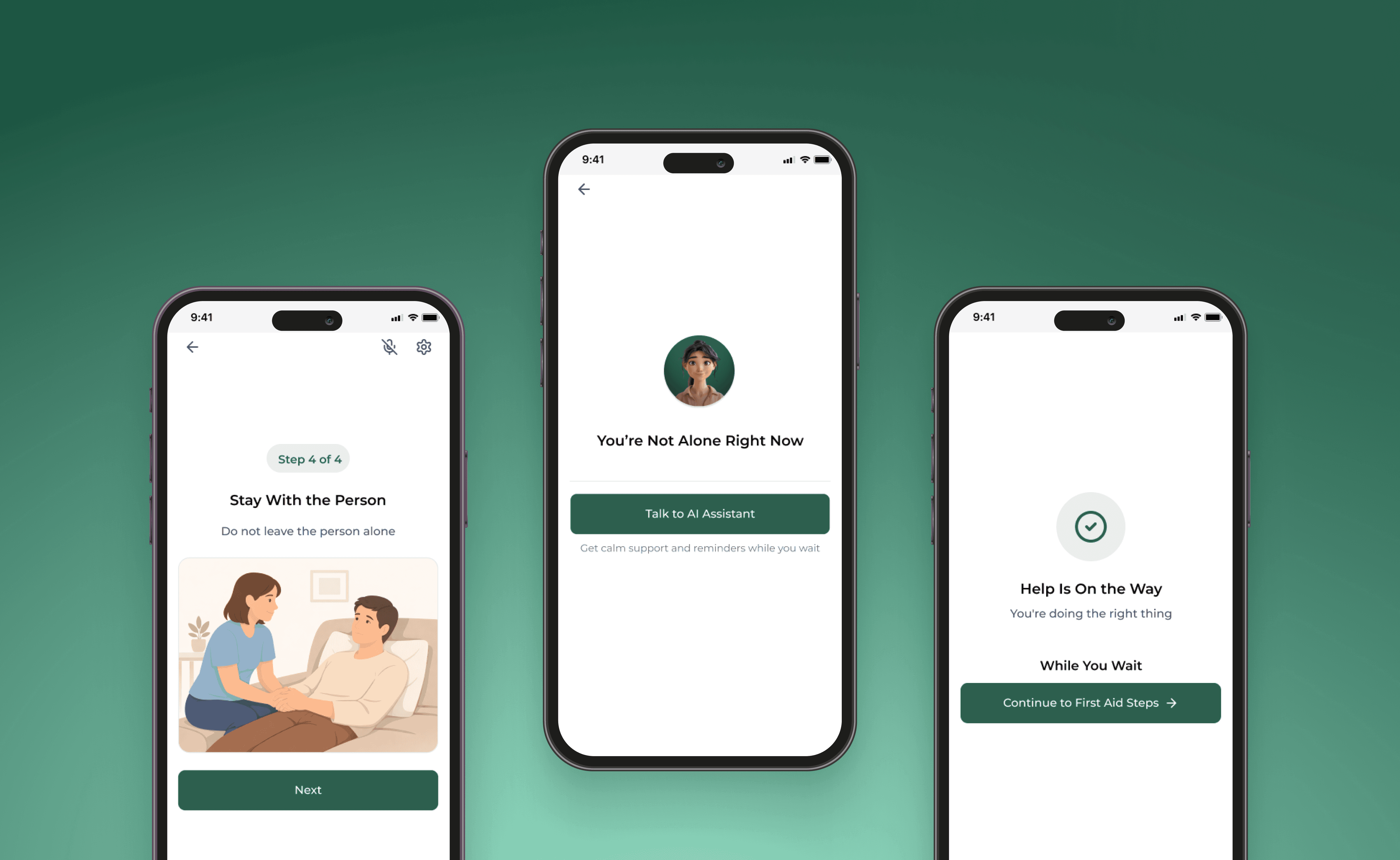
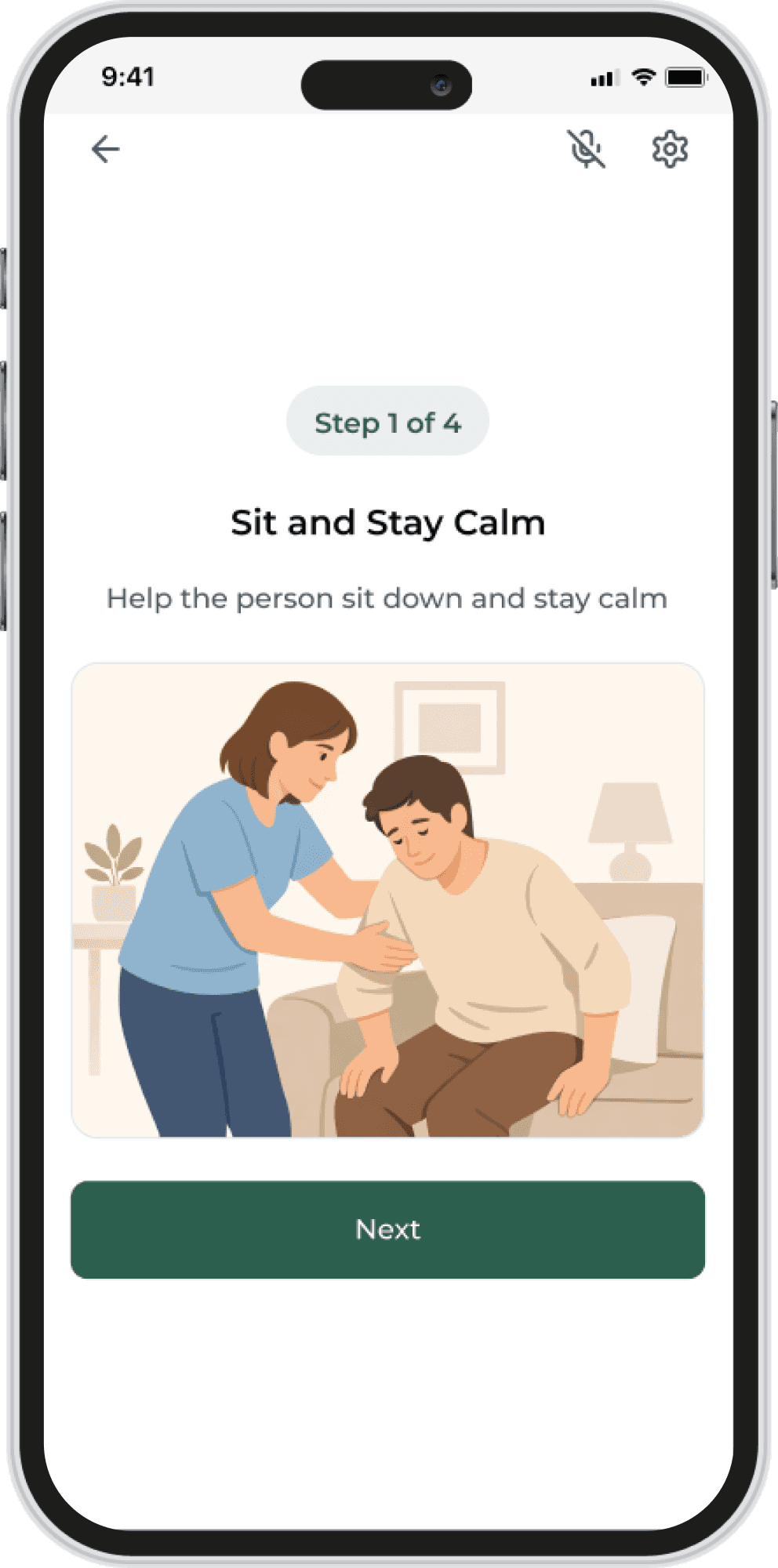
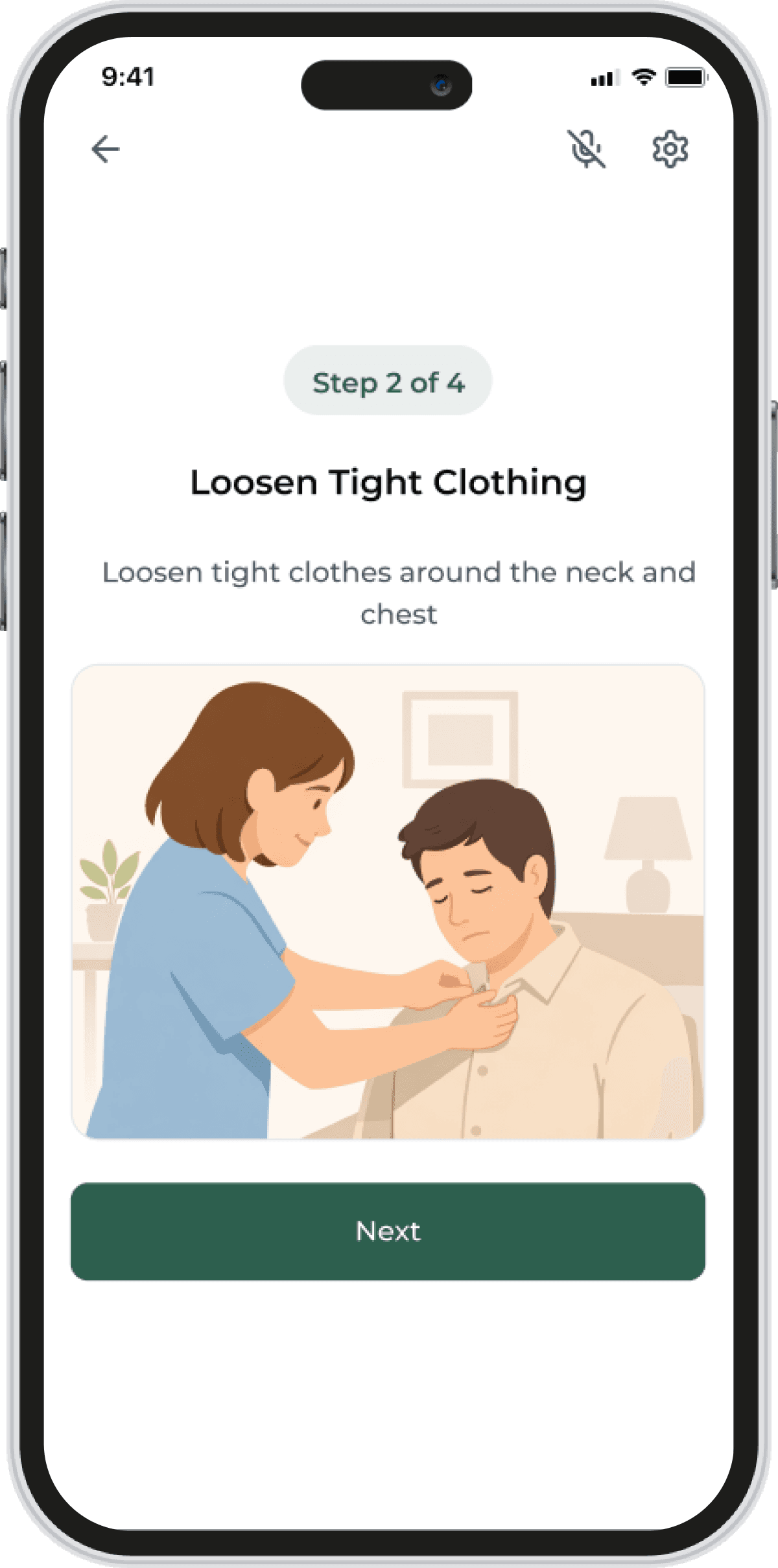
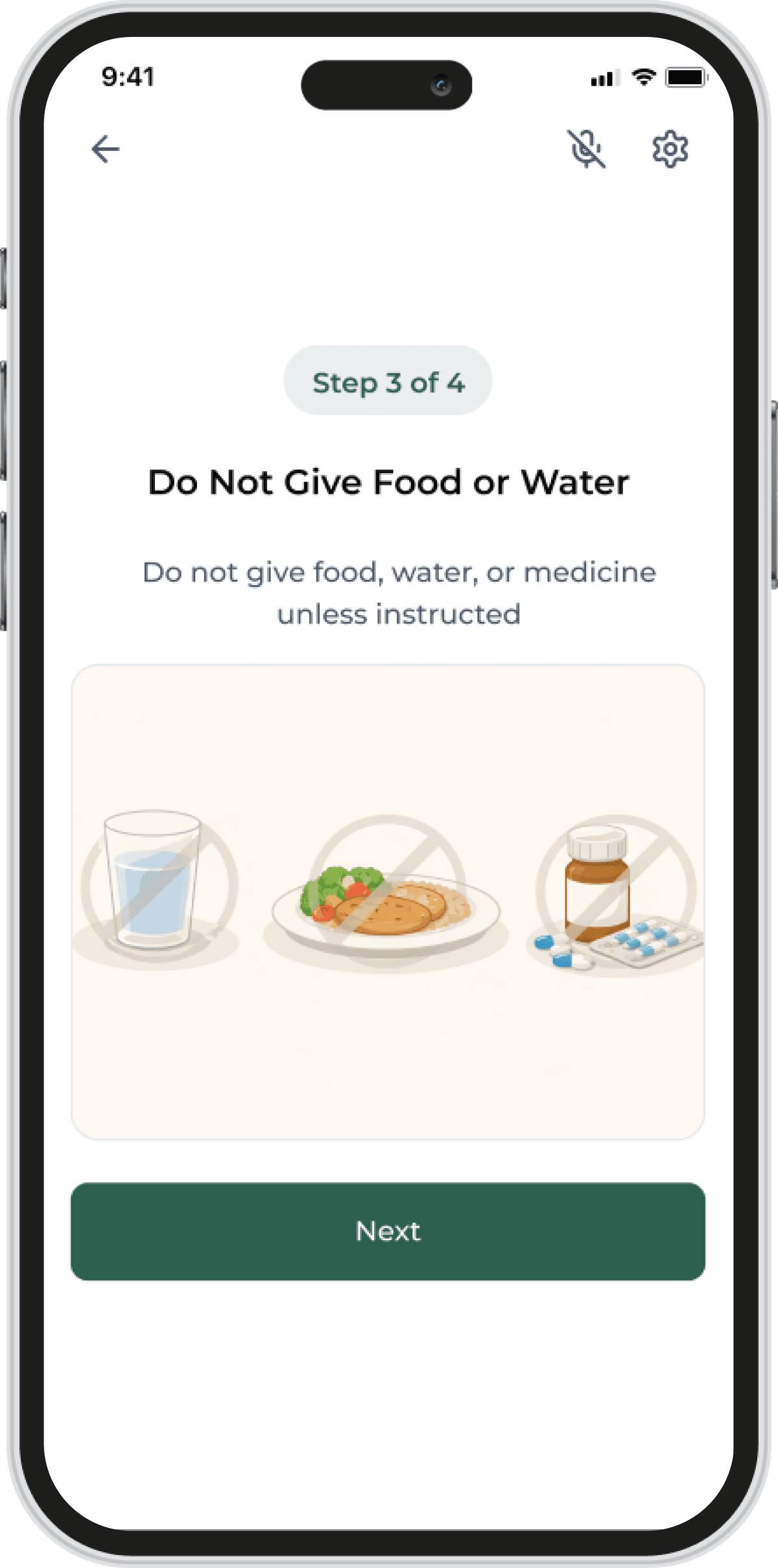
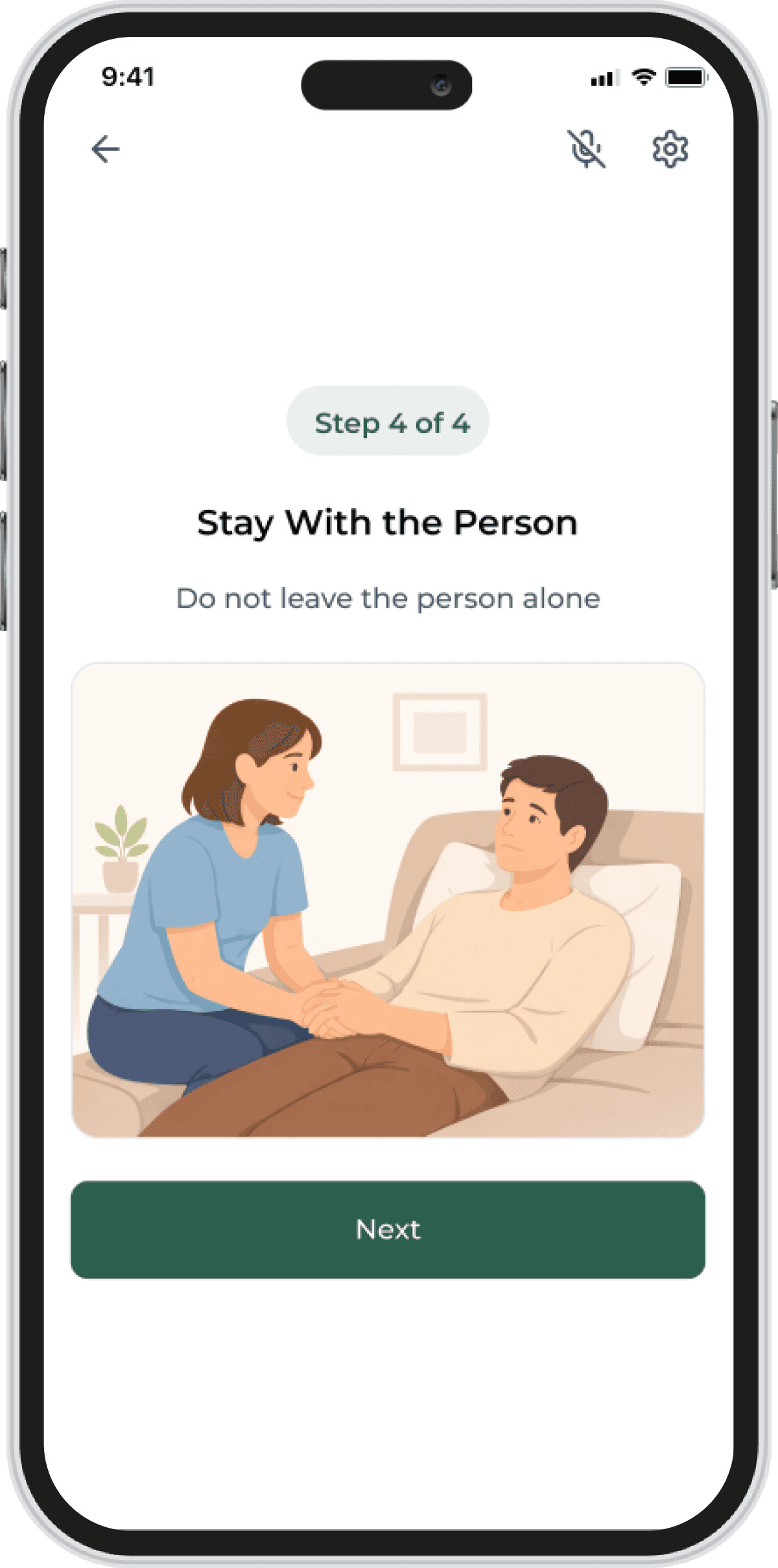
Once emergency help is contacted, the app provides clear, step by step first aid guidance focused on immediate safety and calm action. Each instruction is broken into one simple task at a time, reducing cognitive overload during panic. By using short, direct guidance, the experience helps users stay focused, avoid harmful mistakes, and confidently support the person while waiting for professional medical assistance.
Emotional Support with Aidly
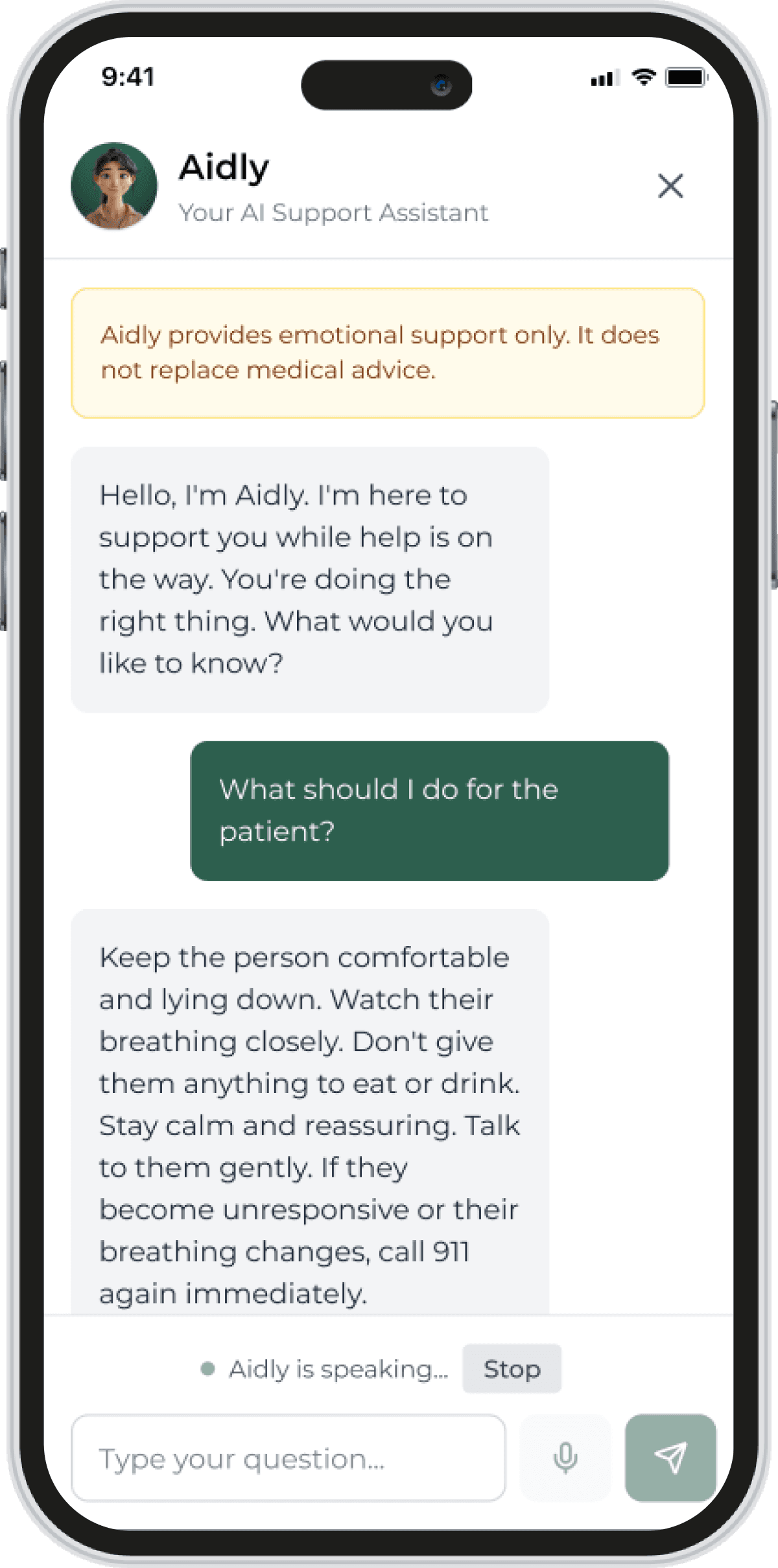
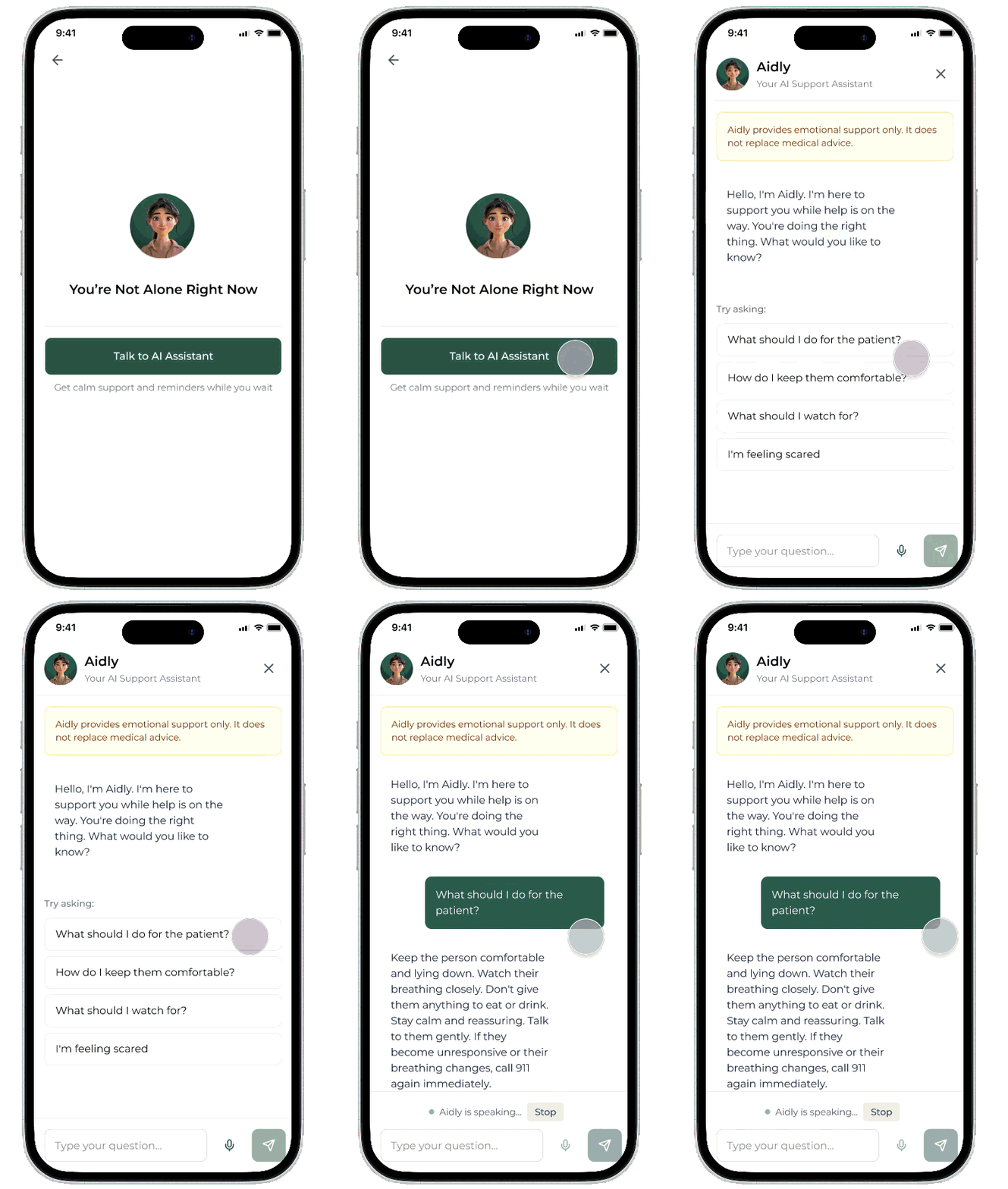
Aidly is the app’s AI support assistant, designed to provide calm reassurance, simple guidance, and emotional support while emergency help is on the way. It helps reduce panic, answers urgent concerns, and keeps users focused during a highly stressful moment.
Reflection
Key Takeaways
Clear, directive guidance matters more than excessive information during high stress situations
Designing for panic means reducing cognitive overload through simple, step by step actions
Accessibility is critical in emergency products, especially for elderly users, low literacy users, and people under pressure
Emotional reassurance can be just as important as functional guidance when users are uncertain or afraid
What would I do differently?
Integrate automatic emergency calling and location sharing
Validate first-aid flows with medical professionals and emergency responders
Conduct usability testing with real caregivers in emergency-like conditions